 |
AFRICAN
CONSERVATION AND WEB SITES FOR AFRICA FROM
AFRICANWEBSITES.NET
PROFILE
ON THE DEMOCRATIC
REPUBLIC OF CONGO
Relief
Map of Democratic Republic of Congo - 214K
The Democratic Republic of Congo ([DRC], formerly Zaire) has an area of 2,344,885
sq km (905,365 sq miles) and is the second largest country of sub-Saharan
Africa. Despite its vast size, it lacks any really noteworthy points of relief:
a considerable natural advantage. Lying across the Equator, DRC has an equatorial
climate in the whole of the central region. Average temperatures range
from 26 degrees C in the coastal and basin areas to 18 degrees C in
the mountainous regions.
Rainfall is plentiful in all seasons. In the north (Uele) the winter
of the northern hemisphere is a dry season; in the south (Shaba) the winter
of the southern hemisphere is dry. The only arid region (less than 800mm
of rain per annum) is an extremely small area on the bank of the lower
Zaire river.
The country comprises, first and foremost, the basin of the River Congo.
This basin had a deep tectonic origin; the continental shelf of Africa had
given way to form an immense hollow, which drew towards it the
waters from the north (Ubangi), from the east (Uele, Arruwimi), and from
the south (Lualaba, that is the upper branch of the River Zaire; Kasai, Kwango).
The crystalline continental shelf levels out at the periphery into plateaux
in Shaba (formerly Katanga) and the Zaire-Nile ridge.
The most broken-up parts of this periphery can be found in the west, in lower
DRC, where the river cuts the folds of a Pre-Cambrian chain by a 'powerful
breach', and above all in the east. Here, as a result of the volcanic overflow
from the Virunga, they are varied by an upheaval of the rift valleys
(where Lakes Tanganyika, Kivu, Edward and Mobutu are located) which carried
the Pre-Cambrian shelf more than 5,000m into Ruwenzori.
The climate is generally favourable for agriculture and woodland. Evergreen
equatorial forest covers approximately 1m. sq km in the equatorial and
sub-equatorial parts. In the north as in the south of this evergreen forest,
tropical forests appear, with many trees that lose their leaves in the dry
season. Vast stretches from the north to the south are, probably as
a result of frequent fires, covered by sparse forest land, where trees
grow alongside grasses (biombo from east Africa), and savannah dotted
with shrubs.
Although favourable on account of its warmth and rainfall, the climate has
a few unfortunate indirect effects. There are vast stretches of DRC where
the soil is leached of its soluble elements by the heavy, warm rainfall.
In addition, the germs and carriers of malaria, sleeping sickness, filariasis,
bilharziasis and ankylostomiasis flourish in a warm, rainy climate.
The natural resources of DRC are immense: its climate is favourable to profitable
agriculture; the forests, if rationally exploited, could yield excellent
results; the abundance of water should eventually be useful to industry and
agriculture; the network of waterways is naturally navigable; and, finally,
there is considerable mineral wealth. The River Zaire carries the second
largest volume of water in the world. With the average flow to the mouth
being 40,000 cu m per second, there are enormous possibilities for power
generation, some of which are being realised at Inga. Indeed, the
hydroelectric resources are considerable in the whole of the Zaire basin.
The major exports of DRC derive from the exploitation of its mineral resources.
Copper is mined in upper Shaba, as are other metals - tin, silver, uranium,
cobalt, manganese and tungsten. Diamonds are found in Kasai, and tin, columbite,
etc. in the east, around Maniema. In addition, many other mineral resources
(iron ore, bauxite, etc.) await exploitation.
Plant and animal life
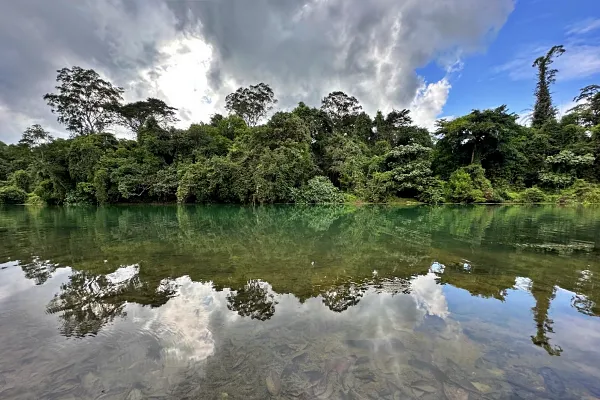
Plant life is profuse and follows climatic patterns. In the centre of the
Congo basin is an intricate forest system, commonly known as the equatorial
rainforest. There trees reach 130 to 160 feet in height, and many plant varieties
and species can be found in a small area. In the tropical climate zone, grassland
and woodland are characteristic, while in the west the coastal swamps and
the mouth of the Congo are dominated by stands of mangrove.
The eastern plateaus are covered by grasslands. Mountain forest, bamboo thickets,
and Afro-Alpine vegetation occur on the highest mountains. The central basin
is a vast reservoir of trees and plants that are native to the area. Among
these, the mahogany, ebony, limba, wenge, agba, iroko, and sapele are sources
of timber.
Fibrous plants include raffia and sisal. There are also plants used in
traditional medicine, including cinchona (the source of quinine) and rauwolfia
(an emetic and antihypertensive), as well as copal, rubber, and palm trees.
Many types of edible mushrooms grow wild; other wild edible vegetables grow
in the forests, grasslands, and swamps. Eucalyptus trees have been imported
and form important stands in the highlands; they are used for construction
timber and poles.
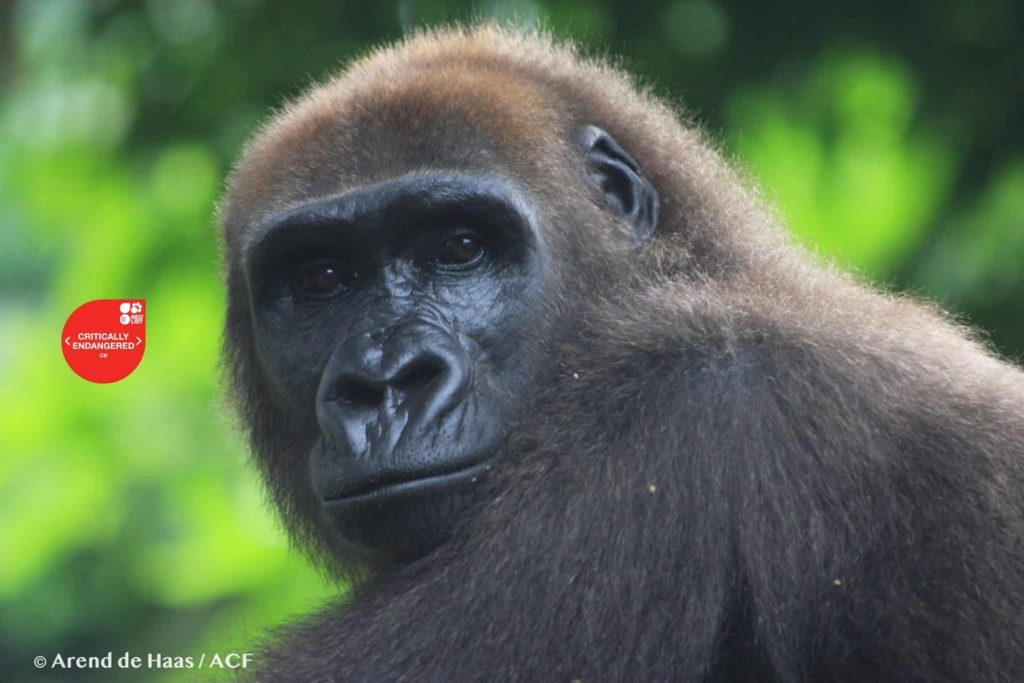
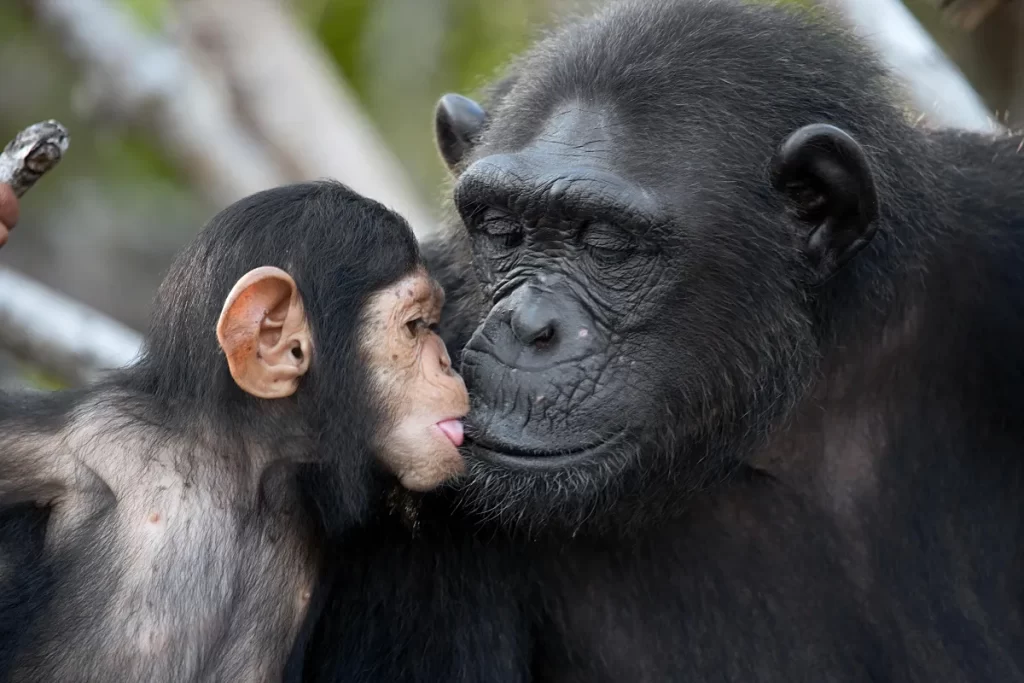
Animal life is also rich and diversified. Chimpanzees are found mostly in
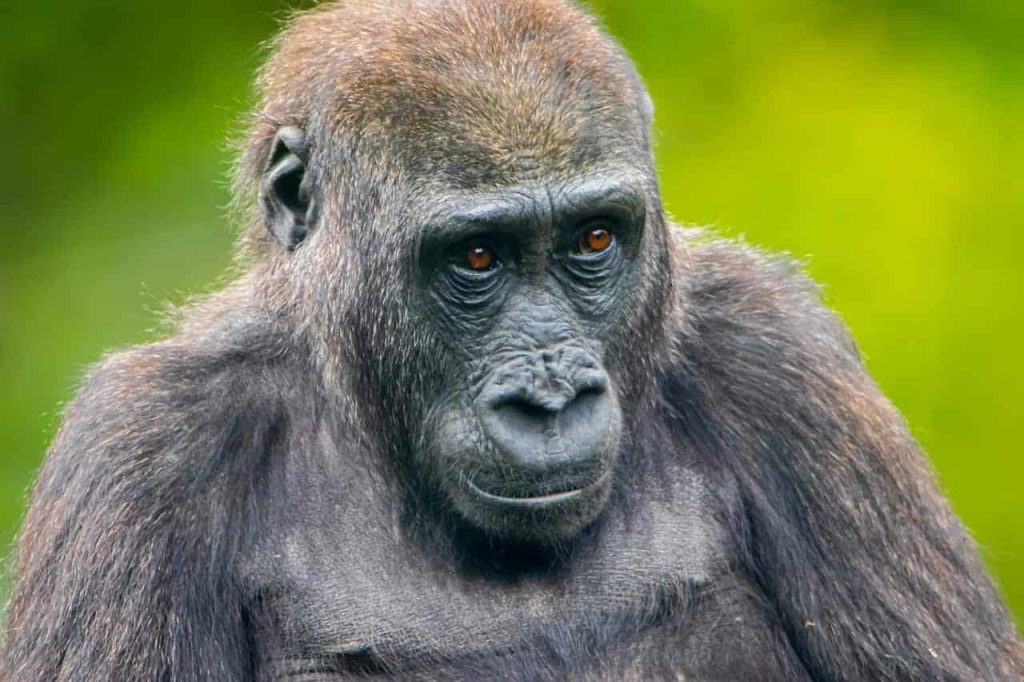
the equatorial forest, and gorillas occur in the eastern mountains around
Lake Kivu; both are found only north of the Congo River. South of the Congo
River, Bonobos are the only inhabitant Great Ape.
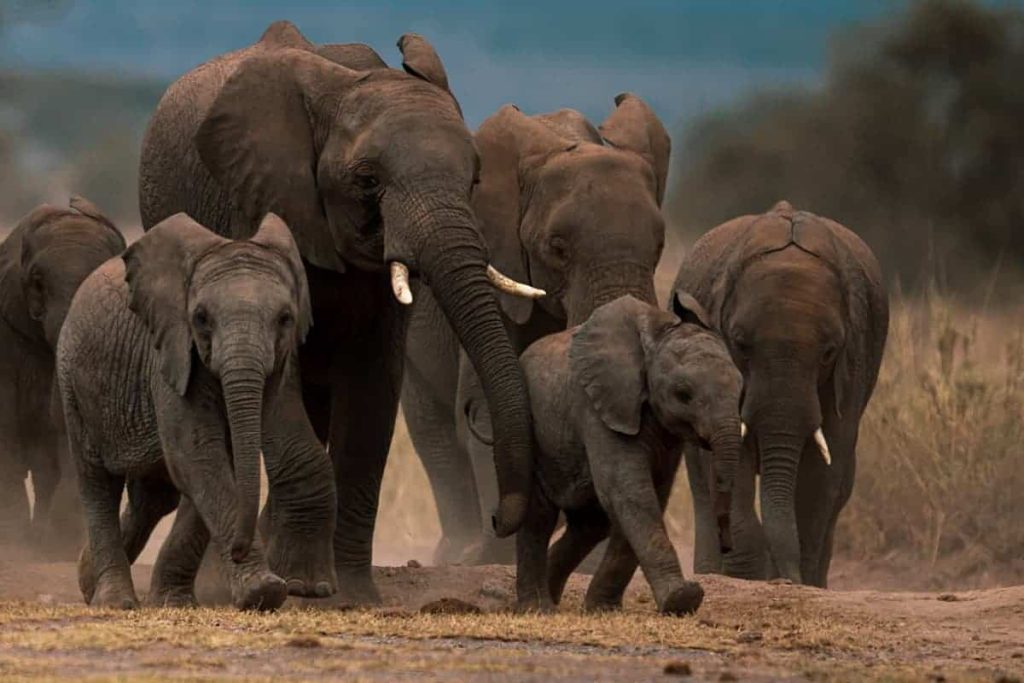
Elephants and various species
of monkey and baboon are found in the forest and the savanna woodland. The
short elephants are, however, exclusively forest-bound. In the primary forests
of Uele, Aruwimi, and Ituri are the okapi, the giant wild boar, and the short
antelope.
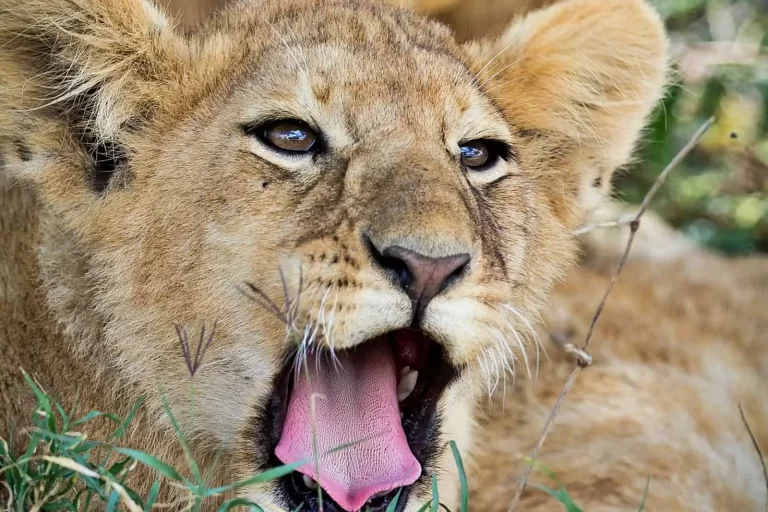
The lion and leopard inhabit the grasslands, and the jackal, hyena, cheetah,
wildcat, wild dog, buffalo, antelope, wild hog, and black and white rhinoceroses
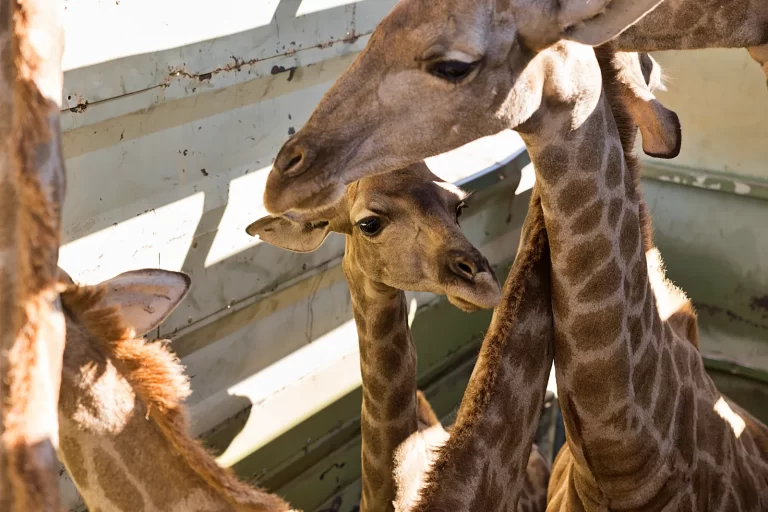
are found in the grasslands and savanna woods. Giraffes mainly inhabit the
northeastern grasslands. Hippopotamuses and crocodiles are common in the
rivers and lakes, and whales, dolphins, and lungfishes are found near the
coast.
Congolese rivers, lakes, and swamps are well stocked with a variety of fish,
such as the capitaine from the Congo River and catfish, electric fish, eels,
cichlids, and many others. There is also a good supply of jellyfish in Lake
Tanganyika. Reptiles are common and include various snakes, such as pythons,
vipers, and tree cobras, as well as lizards, chameleons, salamanders, frogs,
and turtles.
Birdlife includes the pelicans, parrots, and many species of sunbird, pigeon,
duck, goose, eagle, vulture, cuckoo, owl, crane, stork, and swallow. The
insects are innumerable. There are hundreds of species of butterfly; in the
savanna woodlands the butterflies have their special season at the beginning
of the rains, when they can be seen flying in great numbers, filling the
sky and wandering over the blooming trees. DRC also has the Congo Peacock.
There are also bees of all types, different species of grasshopper, and
caterpillars, praying mantises, beetles, dragonflies, scorpions, mosquitoes,
tsetse flies, ants, termites, spiders, centipedes, and millipedes. Much of
the animal life has diminished as the result of hunting, which is now strictly
regulated.
Several national parks have been created, most in the eastern highlands.
They include Garamba, near the Sudan border; Virunga, north of Lake Edward
in the Virunga Mountains; Maiko, west of Lake Edward; Kahuzi-Biega, north
of Bukavu; Upemba, north of the Manika Plateau; and Kundelungu, near the
Zambian border northeast of Lubumbashi.
Salonga is the largest National Park in DRC and is the world's largest equatorial
forest reserve - it is the only National Park within bonobo range. It is
also noteworthy that Garamba, Virunga, Kahuzi-Biega and Salonga are listed
as UNESCO World Heritage Sites ... considered to be "wonders of the natural
world."
If you would like to
contact us please email
terry@africanconservation.org

|